Corporate events are built on detail. From the venue choice and agenda flow to the wayfinding and visual identity, every touchpoint shapes how attendees perceive your brand. Corporate event signage plays a critical role in this experience. When executed correctly, event signage supports navigation, reinforces brand recognition, and creates a seamless, professional environment that feels intentional rather than improvised.
Whether you are planning a conference, product launch, internal business event, awards ceremony, or trade show in the UK, the right corporate event signage strategy ensures your message is clear, consistent, and memorable long after the event ends.
Why Corporate Event Signage Matters at Business Events
Event signage matters because it does far more than display information. Corporate event signage sets expectations, establishes credibility, and guides attendees through unfamiliar spaces with confidence.
At a business event, signage reduces friction. Clear directional signs prevent confusion, welcome signs create a strong first impression, and branded banners visually anchor the event within the venue. Without a clear signage strategy, even well-planned corporate gatherings can feel disjointed or difficult to navigate.
Effective event signage also reinforces brand trust. Consistent use of logos, colours, and messaging across banners, event signs, and digital displays signals professionalism and attention to detail. This is particularly important for business event signage in competitive environments such as conferences, exhibitions, and trade show floors.
Core Types of Corporate Event Signage You Need
Not all signage serves the same purpose. A successful corporate event signage plan uses different signage solutions at specific moments in the attendee journey.
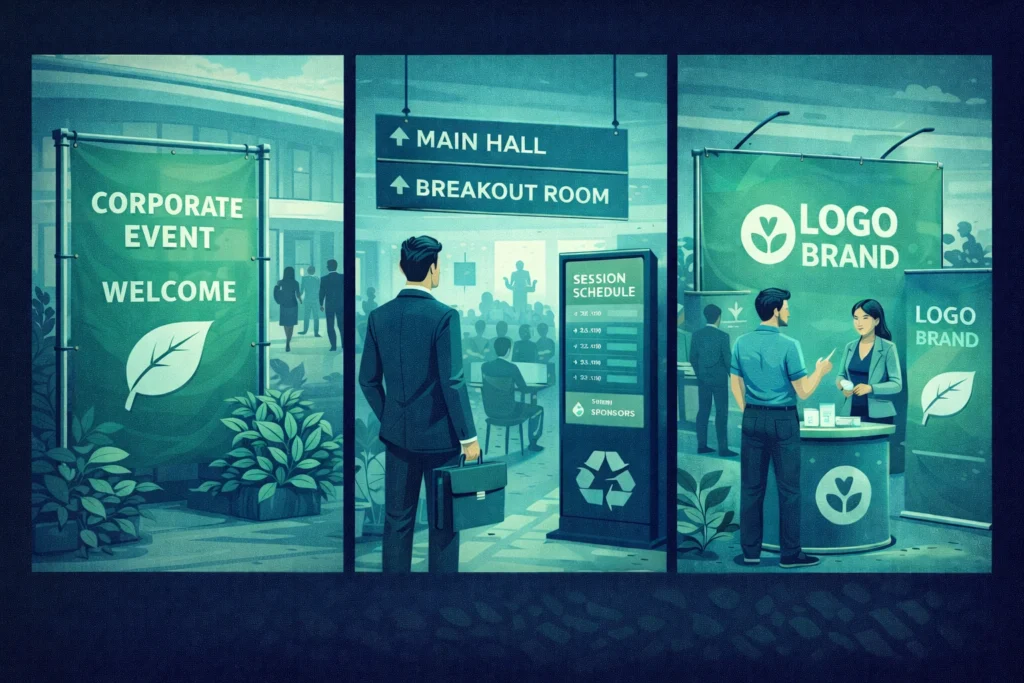
Welcome Signs and Entrance Branding
Welcome signs are often the first branded interaction attendees have with your event. Positioned at entrances, registration areas, or external access points, they confirm arrival and immediately communicate brand identity.
Welcome signage typically includes event names, logos, sponsor recognition, and directional prompts. Large banners, banner stands, or custom printed panels are commonly used here, especially for business events hosted in hotels, conference centres, or large venues across the UK.
Directional and Wayfinding Signage
Directional signage is essential for guiding attendees efficiently. Wayfinding signs reduce congestion, prevent delays, and improve overall event flow.
Directional signs are used to indicate registration desks, breakout rooms, main halls, networking areas, catering zones, and exits. Effective directional signage is legible from a distance, consistently styled, and positioned at natural decision points such as corridors, stairwells, and junctions.
Wayfinding signage is particularly important at large corporate event venues and trade show environments where attendees may be unfamiliar with the layout.
Registration and Check-In Signs
Registration and check-in signs streamline arrivals and reduce queues. These signs clearly identify check-in points, badge collection areas, and help desks.
Well-designed registration signage improves operational efficiency while reinforcing brand presence. Custom event signage at this stage can include branded backdrops, counters, and informational signs outlining schedules or Wi-Fi access.
Informational and Schedule Signage
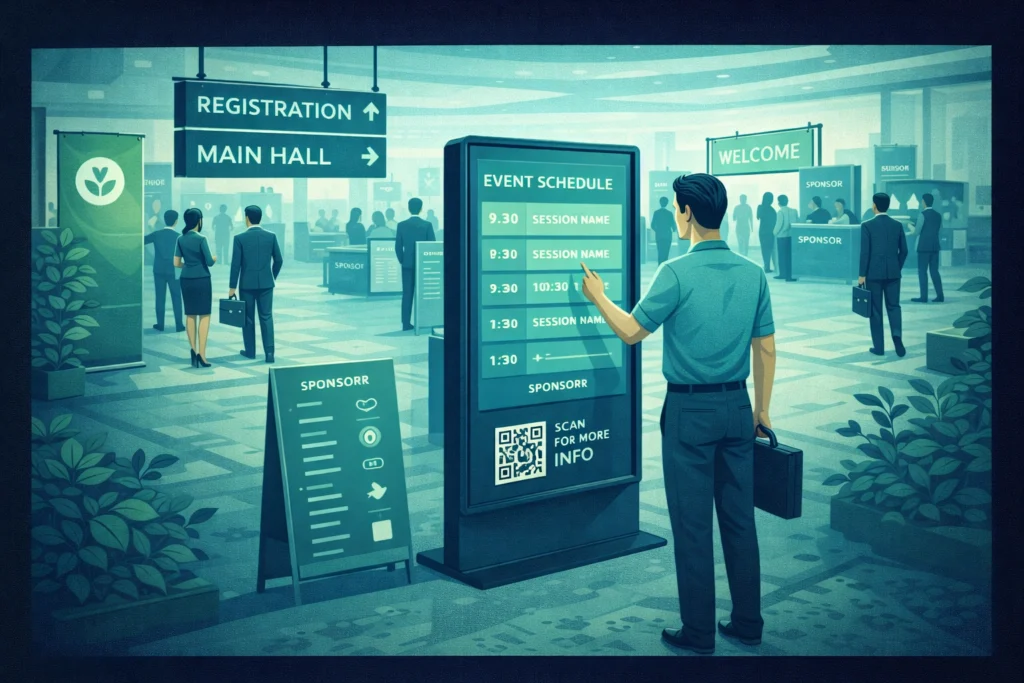
Informational signs support the practical running of your event. These may include event schedules, session listings, speaker information, floor plans, and sponsor acknowledgements.
Printed boards, wall graphics, and digital signage screens are all effective here. Digital signage allows schedules to update in real time, while printed signage offers reliability and visual consistency throughout the event.
Keeping Corporate Event Signage On Brand
Brand consistency is non-negotiable for corporate event signage. Every banner, sign, and display should align with your wider event branding and business identity.
Event Branding, Logo, and Message Control
Corporate event signage should always follow established brand guidelines. This includes correct logo usage, spacing, typography, and colour application. Deviations, even small ones, can dilute brand recognition and weaken the professional feel of the event.
Messaging should also remain consistent. Whether displayed on event banners, digital signage, or directional signs, tone and language should match the purpose of the business event and the expectations of attendees.
Event Theme and Visual Cohesion
Many corporate events adopt a specific event theme. Signage should reflect this theme without overpowering core brand elements. This balance ensures visual interest while maintaining recognisability.
Using the same materials, finishes, and layout principles across signage products helps create a cohesive visual environment throughout the event space.
Digital Signage and Interactive Displays at Corporate Events
Digital signage has become an increasingly valuable component of corporate event signage, especially for large-scale business events and conferences.
Digital displays allow dynamic content such as live schedules, social media feeds, sponsor messages, and real-time updates. QR codes can be integrated into digital signage to link attendees to event apps, agendas, or feedback forms.
Interactive signage can also enhance the event experience by encouraging engagement and participation. Touchscreens, digital wayfinding, and personalised content displays are particularly effective for modern corporate gatherings and technology-focused events.
Business Event Signage, Banners and Custom Printed Signage
Event banners remain one of the most versatile and impactful signage formats. Used internally and externally, banners help establish presence, guide attendees, and reinforce branding at scale.
Banner stands are ideal for flexible placement, while larger banners and signs work well in high-visibility areas such as main halls and entrance zones. For outdoor events, durable banner materials and secure fixing methods are essential to ensure safety and visual quality.
Custom printed signage allows corporate event signage to be tailored precisely to the venue, audience, and objectives of the event. Dye-sublimation printing is often used for fabric banners and displays due to its colour consistency and professional finish.
Placement Strategy: Where Signage Has the Most Impact
Knowing where to place signage is as important as knowing what signage to use. Strategic signage placement ensures visibility without clutter.
Key placement areas include:
- Venue entrances and external access points
- Registration and check-in zones
- Main event halls and presentation areas
- Corridors, staircases, and transition spaces
- Networking, catering, and sponsor zones
Placed signage should feel intentional and evenly distributed throughout the event. Overcrowding an area with signage can be as damaging as under-signposting key locations.
Signage for Trade Shows and Exhibitions
Trade show environments require a slightly different approach to corporate event signage. Competition for attention is high, and signage must work harder to attract attendees to your stand.
Business event signage at trade shows should prioritise visibility, clarity, and strong brand messaging. Banner stands, hanging signs, and custom event signage are commonly used to stand out on busy trade show floors.
Effective signage at trade shows helps attendees understand who you are, what you offer, and why they should engage with your brand within seconds.
Installation, Durability, and Event Logistics
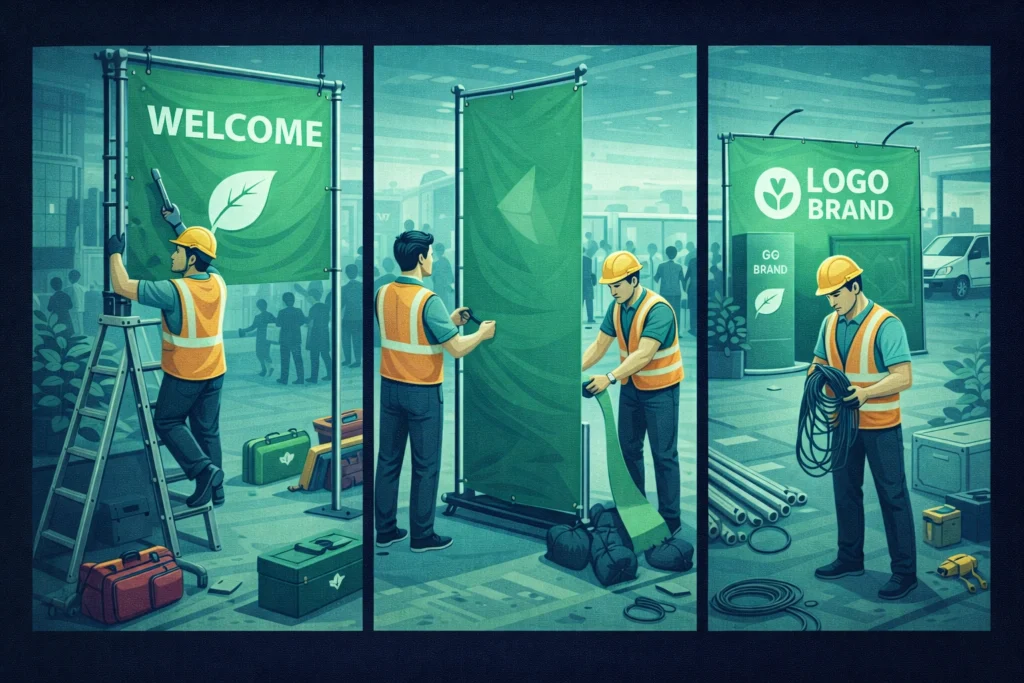
Professional installation is critical to the success of corporate event signage. Poorly installed signs undermine even the best designs and can create safety risks.
Installation planning should consider access times, venue restrictions, health and safety requirements, and teardown schedules. For multi-day or multi-venue events, signage durability becomes especially important.
High-quality signage solutions ensure banners and signs remain visually sharp throughout the event, even in high-traffic areas.
Measuring the Success of Your Event Signage
Corporate event signage contributes directly to the success of your event, but its impact should still be measured.
Metrics may include:
- Reduced wayfinding queries
- Improved attendee flow
- Increased engagement with sponsors
- Higher dwell times at key areas
- Positive attendee feedback
Signage that improves clarity and experience often goes unnoticed precisely because it works so well. Reviewing event performance data helps refine signage strategies for your next event.
Final Thoughts: Signage That Supports the Success of Your Event
Corporate event signage is not an afterthought. It is a strategic tool that supports branding, navigation, engagement, and overall professionalism.
When signage is planned early, designed with purpose, and placed strategically, it creates a seamless event experience that attendees remember for the right reasons. From welcome signs and wayfinding signage to digital displays and event banners, every element should work together to support your business goals.
Investing in effective event signage ensures your next event communicates clearly, looks professional, and leaves a lasting impression long after the final attendee leaves the venue.