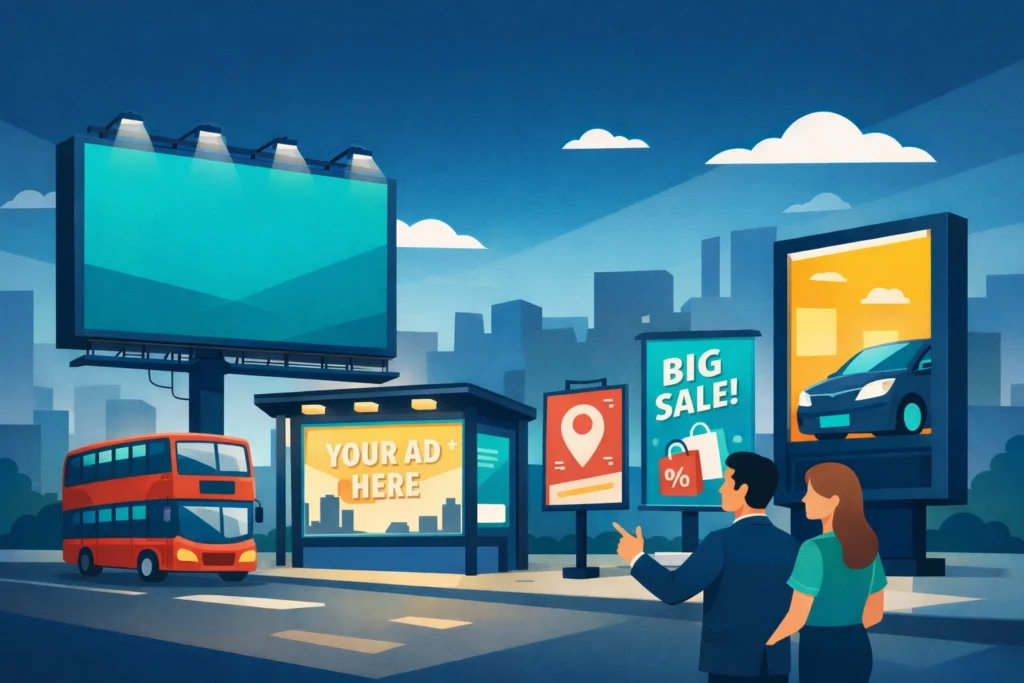
Local advertising has changed significantly over the last decade. Where once advertising boards and pavement signs dominated high streets, digital signage displays are now becoming a common sight outside retail stores, hospitality venues, and service businesses. For modern businesses running local campaigns, the choice often comes down to a simple question: do traditional advertising boards still work, or does a digital signage screen deliver better results?
This guide compares advertising boards and digital signage displays side by side. We’ll look at visibility, cost, flexibility, environmental impact, and suitability for different types of local campaigns, helping you decide which advertising strategy works best for your business.
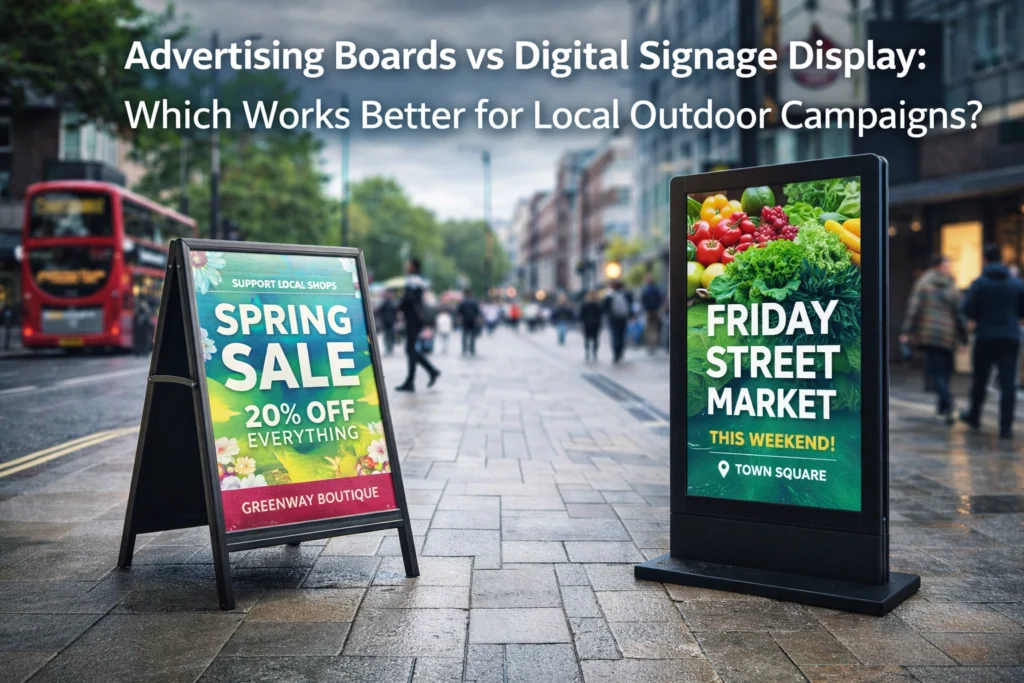
Understanding Advertising Boards in Local Outdoor Campaigns
Advertising boards are one of the most established forms of outdoor advertising. From pavement signs and sandwich boards to aluminium signage boards and outdoor banner displays, they remain a familiar and effective option for local promotion.
An advertising board is typically a printed display designed for outdoor use. These boards are placed outside a business, on pavements, forecourts, or retail parks, to grab attention from passing footfall. Because they rely on physical materials rather than screens, advertising boards are often associated with traditional advertising methods.
Types of Outdoor Advertising Boards Commonly Used
There is a wide range of advertising boards available, each designed for different environments and budgets:
- Pavement sign and a-board options for high streets and hospitality venues
- Heavy duty pavement signs for exposed outdoor use
- Aluminium signage boards for long-term outdoor advertising
- Chalkboard signs for cafés, bars, and restaurants
- Outdoor banner and outdoor advertising boards for temporary promotions
- Notice boards and signage boards for community and retail spaces
Many advertising boards are produced in 3mm aluminium composite or correx, making them weatherproof and suitable for year-round outdoor signage. Boards are easy to customise with printed posters, special offers, or seasonal promotions, and most options support indoor and outdoor use.
What Is Digital Signage and How Does It Work?
Digital signage uses screens to display advertising content such as promotions, videos, menus, and announcements. A digital signage screen can be installed indoors or outdoors and is controlled remotely through digital signage solutions.
Unlike printed advertising boards, digital signage uses LED or LCD technology to deliver real-time updates. This allows businesses to change messaging instantly without reprinting materials, making it a key component of modern advertising strategies.
Common Uses of Digital Signage Displays
Digital signage displays are increasingly used for:
- Retail store promotions and window displays
- Hospitality menus and daily specials
- Real-time offers and countdown promotions
- Brand messaging and digital advertising campaigns
- Indoor and outdoor advertising displays
Digital signage uses screens that are often specifically designed for outdoor use, with weatherproof casings and high brightness to ensure visibility in daylight.
Advertising Boards vs Digital Signage: Visibility and Impact
Visibility is one of the most important factors in any local advertising campaign. Both advertising boards and digital signage displays aim to increase footfall, but they do so in different ways.
Advertising Boards and Street-Level Visibility
Advertising boards are placed at eye level and are particularly effective in pedestrian-heavy areas. Pavement signage, sandwich boards, and forecourt pavement signs work well because they sit directly in the customer’s line of sight.
Advertising boards are static, but that simplicity can be a strength. A clear message, bold colours, and strong graphic design can make an advertising board instantly readable. For businesses relying on walk-in traffic, traditional signage remains one of the most cost-effective forms of outdoor advertising.
Digital Signage Displays and Motion-Based Attention
Digital signage displays attract attention through motion, brightness, and changing content. Digital screens can show animations, videos, or rotating promotions, which often stand out in busy environments.
Because digital signage uses screens, it can be especially effective in low-light conditions or during evening trading. Digital signage to maximise visibility often relies on LED technology and high-luminance displays designed for outdoor signage.
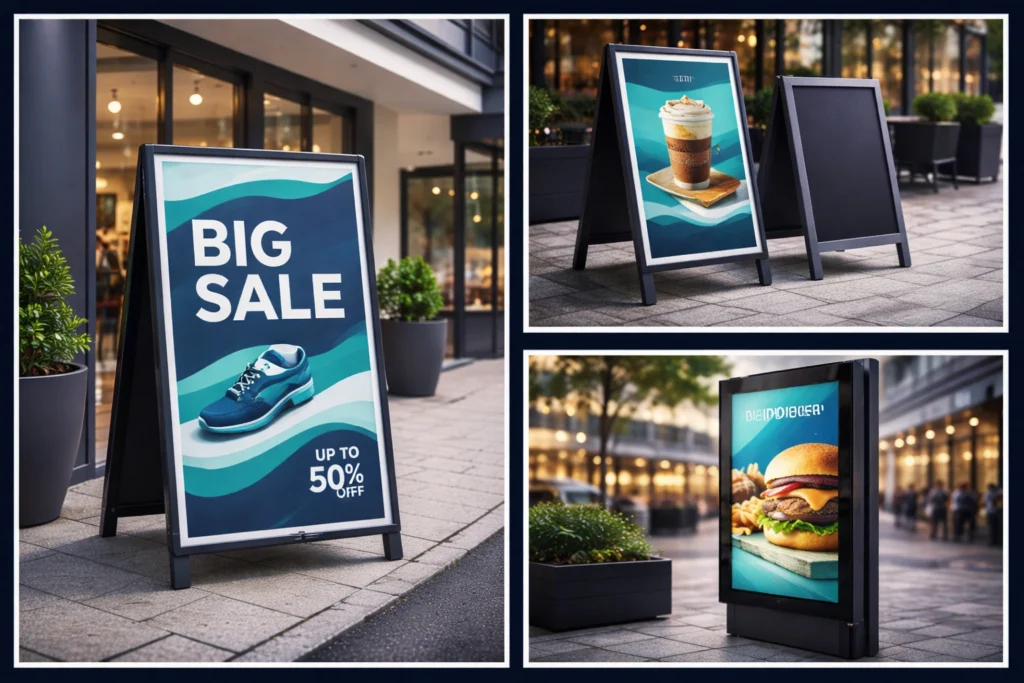
Cost Comparison: Traditional Advertising vs Digital Displays
Budget is often the deciding factor when choosing between advertising boards and digital signage.
Cost of Outdoor Advertising Boards
Advertising boards are generally cheaper upfront. Traditional signs are cheaper to produce, especially for small businesses running short-term promotions. Costs usually include:
- Printing and materials
- Basic graphic design
- Optional delivery, often with UK delivery available
- Minimal installation requirements
Advertising boards are cost-effective because they require no power, no software, and very little ongoing maintenance. For many local campaigns, advertising boards are typically the most accessible solution.
Cost of Digital Signage Displays
Digital signage displays have a higher initial investment. Costs can include:
- Digital signage screen hardware
- Mounting systems or enclosures
- Content management software
- Electricity and connectivity
- Ongoing content updates
While digital signage solutions offer flexibility, they are not always suitable for smaller budgets. However, for businesses running frequent promotions, the ability to update content without reprinting can offset long-term costs.
Flexibility and Content Control
Outdoor Advertising Boards and Printed Content
Advertising boards rely on printed posters or fixed designs. Updating content means reprinting, which can slow down fast-moving campaigns. However, this also encourages clarity. Traditional signage forces businesses to focus on simple, readable messages.
Printed posters and custom-printed advertising boards work best for:
- Fixed opening hours
- Seasonal offers
- Brand awareness messaging
- Long-running promotions
Digital Signage and Real-Time Updates
Digital signage uses screens that allow real-time updates. Businesses can schedule promotions, adjust messaging throughout the day, and respond instantly to changes.
Digital signage to maximise engagement often includes:
- Real-time updates for special offers
- Countdown timers
- Dynamic menus
- Digital advertising linked to campaigns
This flexibility makes digital signage appealing to modern businesses with changing schedules or multiple locations.
Environmental Impact and Sustainability
Environmental impact is increasingly part of the advertising strategy conversation.
Environmental Impact of Outdoor Advertising Boards
Traditional advertising boards can be environmentally responsible when produced correctly. Many signage boards are recyclable, and aluminium signage boards have a long lifespan. Using durable materials reduces waste, especially when boards are reused.
However, frequent reprinting of printed posters can increase waste if not managed properly.
Environmental Impact of Digital Signage
Digital signage reduces paper waste but increases energy consumption. Digital screens require electricity and often use LED technology continuously. While newer screens are more energy-efficient, the environmental impact depends on usage patterns and power sources.
For businesses prioritising sustainability, the choice often depends on how long signage will be used and how frequently content changes.

Which Works Better for Local Campaigns?
The answer depends on your business, location, and campaign goals.
Advertising boards work best when:
- You need a cost-effective solution
- Your message is simple and long-lasting
- You rely on foot traffic outside your business
- You want weatherproof outdoor signage with minimal maintenance
Digital signage displays work best when:
- You need frequent content changes
- You want real-time updates and digital advertising
- You operate in low-light or high-competition environments
- You have the budget and infrastructure to support screens
For many local businesses, the most effective approach is a combination. Advertising boards handle street-level visibility, while digital signage screens reinforce messaging indoors or in high-impact window displays.
Choosing the Right Advertising Strategy
When comparing advertising boards vs digital signage, avoid thinking in absolutes. Traditional methods still work, especially for local campaigns where clarity, cost, and simplicity matter.
Ask yourself:
- Where will the signage be placed, indoors or outdoors?
- How often does the message need to change?
- What is the budget for installation and maintenance?
- How important is digital content to the brand experience?
Advertising boards are weatherproof, reliable, and proven. Digital signage displays offer flexibility, motion, and modern appeal. The right solution depends on how your business communicates with its audience.
Final Thoughts
Advertising boards and digital signage displays both play important roles in local advertising. Traditional advertising boards remain one of the most cost-effective ways to promote offers outside your business, while digital signage provides powerful tools for real-time engagement.
By understanding the strengths of each, businesses can build an advertising strategy that increases footfall, reinforces brand presence, and adapts to changing customer expectations. In many cases, combining advertising boards with digital signage creates the strongest results for modern local campaigns.