
Wayfinding signage design plays a critical role in shaping how people experience an event space. From guiding visitors through large exhibition halls to helping attendees navigate interior signage systems quickly and confidently, a well-planned wayfinding strategy improves user experience, strengthens brand presence, and reduces confusion.
This complete guide to wayfinding signage explains how to design wayfinding signage that works in real environments. We will explore different types of wayfinding signage, key design principles, placement strategies, and testing methods so your event signage delivers effective navigation from the moment visitors arrive.
What Is Wayfinding Signage Design and Why Is It Important?
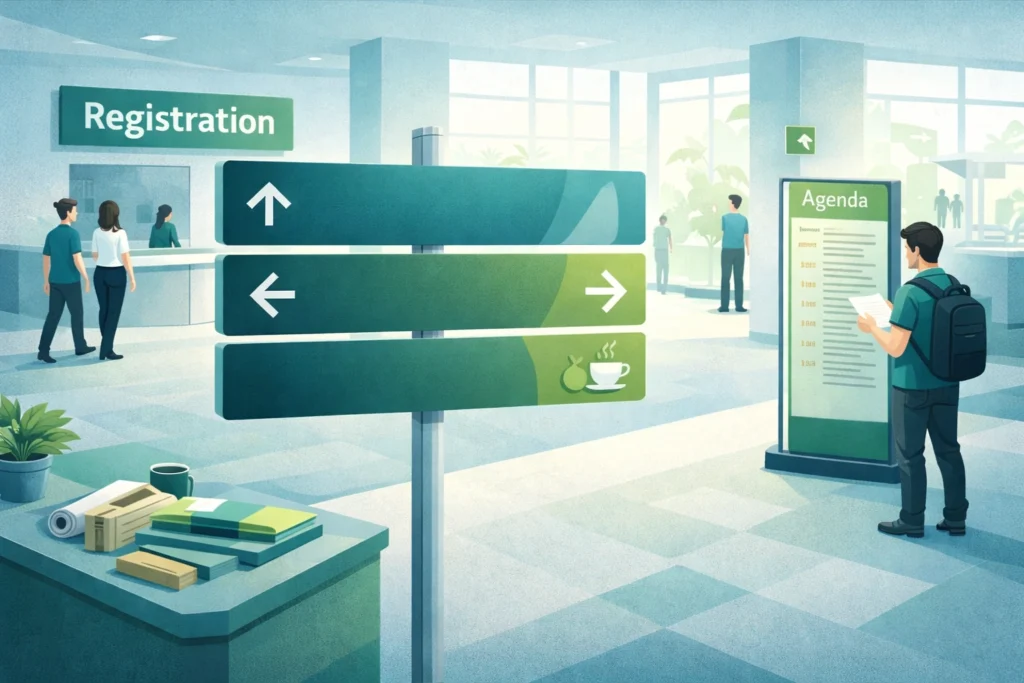
Wayfinding signage design refers to the planning and creation of signage that helps people navigate spaces intuitively. Wayfinding and directional signage guide visitors through environments using visual cues such as colour, typography, layout, and placement.
At events, signage helps attendees find entrances, registration desks, stages, facilities, and exhibition stands without needing assistance. A strong wayfinding system improves accessibility, enhances the overall wayfinding experience, and supports seamless movement across busy environments.
The benefits of wayfinding go beyond navigation. Well-designed wayfinding signage reinforces brand identity, reduces congestion, and creates a more professional and organised event atmosphere. Good wayfinding ensures visitors feel confident and supported as they move through the space.
Different Types of Wayfinding Signage You Need to Know About
Understanding the different types of wayfinding signage is essential when building a complete wayfinding signage system. Each type serves a specific function within the overall navigation design.
Identification signage helps visitors recognise key locations such as entrances, meeting rooms, or zones. Informational signage provides context, maps, or schedules that support decision-making. Directional signage guides people toward destinations using arrows, icons, or distance markers. Regulatory signage communicates rules or safety instructions that support accessibility and compliance.
A successful wayfinding strategy combines these signage elements into a cohesive system. Rather than treating signs as isolated pieces, effective wayfinding design integrates identification signs, informational signage, and directional signs into one consistent design language.
Key Design Principles for Effective Wayfinding Signage
Strong wayfinding design combines art and design thinking with practical navigation needs. Key design principles focus on clarity, consistency, and readability.
Colour plays a major role in effective wayfinding signage. Colours for wayfinding should be chosen to align with brand guidelines while maintaining contrast for accessibility. Fonts must remain clear at distance, and sign design should avoid overcrowding information.
Inclusive design is essential. Accessibility considerations include legible font sizes, clear iconography, and logical placement heights. A thoughtful wayfinding approach ensures that signage helps all visitors navigate comfortably, including those with mobility or visual impairments.
Consistent design across signage panels creates intuitive wayfinding. When visitors recognise visual cues repeated across the environment, they can follow signage confidently without needing to stop and interpret each sign individually.
How to Design Wayfinding Signage for Events
The design process for wayfinding signage design needs to begin long before installation. Start by mapping visitor journeys and identifying key decision points where people need direction. These might include entrances, corridors, junctions, or high-traffic areas.
A well-designed wayfinding system considers how people naturally move through the space. Rather than overwhelming visitors with too many signs, focus on creating a clear hierarchy that prioritises essential navigation information.
Branded signage can be integrated into the wayfinding strategy without compromising clarity. The goal is to combine good design with functional navigation, ensuring the wayfinding signage system supports both brand visibility and practical movement.
Creative wayfinding solutions may include floor graphics, suspended signage panels, or digital signage displays that adapt to changing event schedules.

Where to Place Wayfinding Signs for Maximum Impact
Placement is one of the most important design considerations in wayfinding signage design. Even the most visually strong signage will fail if it is positioned incorrectly.
Effective wayfinding signage should appear at key navigation points where visitors make decisions. This includes entrances, intersections, escalators, registration areas, and transition zones between exhibition spaces.
Interior signage should be positioned at natural eye level and aligned with movement flow. Outdoor signage may need larger formats and weather-resistant materials to remain visible in busy environments.
Successful wayfinding signage ensures that visitors always see the next directional cue before reaching a decision point. This proactive placement reduces confusion and supports improved wayfinding across large event venues.
Using Colour, Branding, and Typography in Wayfinding Design
Colour and branding must support navigation rather than dominate it. Colours for wayfinding should create contrast and guide attention while still reflecting the event’s visual identity.
Typography choices should prioritise legibility. Sans-serif fonts with strong spacing often perform best for directional signage. Consistent font usage across all signage solutions helps create a unified wayfinding experience.
Branded signage elements can be incorporated into wayfinding signage systems to reinforce identity without sacrificing usability. The design focuses on balancing aesthetics with clarity so visitors can navigate quickly and confidently.
Testing Your Wayfinding System Before the Event
Testing is often overlooked but is essential to ensure your wayfinding signage design performs effectively. A design that looks clear on paper may behave differently in real exhibition environments.
Walkthrough testing during the design and manufacturing phase helps identify potential wayfinding challenges. This may include blind spots, unclear messaging, or areas where additional signage is required.
Consider running trial navigation routes to evaluate how signage guides people through the space. Observing user behaviour provides valuable insights into whether the signage provides intuitive cues or requires adjustments.
Digital signage and modular wayfinding signage systems make it easier to update messaging quickly based on feedback during setup.
How Professional Wayfinding Design Improves User Experience
Professional wayfinding design combines technical expertise with thoughtful planning. A complete guide to wayfinding signage must consider user experience at every stage, from design process through installation.
Well-designed wayfinding signage helps visitors feel confident navigating unfamiliar environments. Improved wayfinding reduces stress, shortens journey times, and allows attendees to focus on the event itself rather than searching for directions.
Wayfinding signage systems built through in-house design and manufacturing processes ensure consistency across all signage panels. This approach creates cohesive navigation that supports a positive event experience.
Common Wayfinding Challenges and How to Solve Them
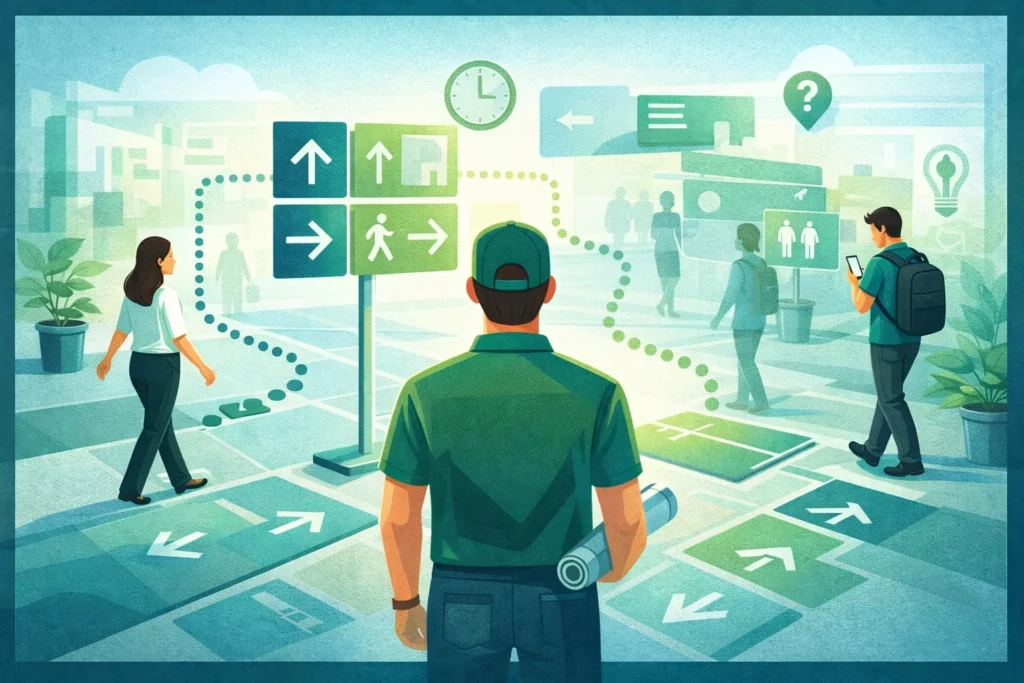
Many events struggle with inconsistent signage or unclear navigation cues. Wayfinding challenges often arise when signage is added late in the planning process or designed without a clear strategy.
Common issues include overcrowded sign design, inconsistent colour usage, and poor placement. Solving these problems requires a thoughtful wayfinding strategy that aligns signage elements with visitor behaviour.
Good wayfinding signage design combines professional design principles with real-world testing. By focusing on intuitive navigation and consistent design language, events can create a seamless wayfinding experience that benefits both visitors and organisers.
Final Thoughts
Wayfinding signage design is a vital part of successful event planning. From directional signage and informational signage to branded identification signs, a complete wayfinding system helps visitors navigate confidently while reinforcing brand identity.
By following key design principles, choosing colours for wayfinding carefully, and testing signage before installation, event organisers can create effective wayfinding signage that improves user experience and supports a more organised event environment.
A thoughtful approach to wayfinding signage design ensures signage guides people naturally, signage helps visitors move seamlessly, and signage provides a professional impression that reflects the quality of the event itself.