
As businesses increasingly focus on sustainability goals and reducing their environmental impact, many are exploring whether sustainable digital signage can offer a greener alternative to traditional printed materials. From retail environments and corporate offices to transport hubs and hospitality venues, digital signage screens are becoming a common feature in modern communication strategies.
But does using sustainable digital signage systems truly reduce waste, or does increased energy consumption offset the environmental benefits? Understanding the sustainability of digital signage requires a balanced view of factors such as carbon footprint, lifespan, energy efficiency, electronic waste, and operational practices.
This guide explores the environmental impact of digital signage, compares digital displays with traditional signage, and examines how businesses can implement eco-friendly digital signage solutions responsibly.

What Is Sustainable Digital Signage, and How Do Digital Signage Systems Work?
Sustainable digital signage refers to the use of displays and signage networks designed to minimise environmental impact while supporting communication and advertising needs. A digital signage system typically includes digital screens such as LCD or LED displays, cloud-based digital signage software, content management platforms, and remote management capabilities.
Digital signage refers to electronic display solutions that deliver dynamic digital content in real time. Businesses using digital signage can update messaging instantly without replacing printed materials, reducing paper waste and enabling more flexible communication solutions.
Modern sustainable digital signage systems often integrate energy-efficient displays and automatic brightness adjustment sensors that respond to ambient light conditions. These features help reduce energy consumption and support sustainability efforts by ensuring screens only use the power required for optimal visibility.
By improving operational efficiency and reducing reliance on physical signage replacement, sustainable digital signage can contribute to a more environmentally friendly advertising approach.
Comparing Traditional Signage and Digital Displays in Terms of Sustainability
Traditional signage relies heavily on printed materials such as posters, banners, and rigid signage panels. While printed signage can be produced using sustainable materials, frequent campaign changes often lead to increased paper waste and replacement costs.
In contrast, sustainable digital signage replaces printed formats with reusable digital content. Digital signage displays allow businesses to run multiple campaigns on a single screen, reducing the need for repeated production and installation of physical signage.
However, sustainability in digital signage must consider the environmental impact of digital screen manufacturing, energy consumption, and eventual electronic waste. The lifespan of digital displays plays an important role in determining whether digital signage over traditional signage offers a greener solution.
Businesses aiming to meet corporate social responsibility targets should evaluate both the benefits of digital signage and the environmental implications of digital formats before making investment decisions.

Energy Efficiency and the Environmental Impact of Digital Signage
Energy consumption is one of the most discussed aspects of the sustainability of digital signage. Digital signage screens require continuous power, particularly in high-brightness environments such as retail storefronts or transport hubs.
Energy-efficient displays, including LED displays and advanced LCD technologies, can significantly reduce power usage compared to older digital signage systems. Features such as automatic brightness adjustment based on ambient light help reduce energy consumption during quieter periods or low-light conditions.
Green digital signage solutions often incorporate sensors and scheduling systems to ensure screens operate only when required. This approach can reduce energy consumption, lower operational costs, and minimise the carbon footprint associated with digital signage networks.
While sustainable digital signage can support a greener future when implemented correctly, businesses must consider how signage management strategies influence overall environmental performance.
Reducing Paper Waste and Supporting Sustainability Goals
One of the strongest arguments for using digital signage is its ability to reduce paper waste. In environments where campaigns change frequently, printed materials such as promotional posters or seasonal signage can contribute to significant waste volumes.
Digital signage supports sustainability goals by allowing businesses to manage digital content remotely and update messaging in real time. This eliminates the need for repeated printing and physical replacement of signage solutions.
Reducing paper waste also contributes to lower emissions associated with transportation and production processes. By using digital signage systems strategically, businesses can align marketing activities with sustainability efforts and environmental objectives.
Sustainable advertising strategies often combine digital signage with environmentally responsible print practices, ensuring that signage matters from both communication and ecological perspectives.

The Lifespan of Digital Signage Displays and Electronic Waste Considerations
The lifespan of digital signage displays is a critical factor in assessing their environmental impact. High-quality digital signage screens can operate for several years with proper maintenance, reducing the frequency of equipment replacement.
However, electronic waste remains an important consideration. Businesses adopting sustainable digital signage solutions should plan for responsible recycling and disposal of outdated digital screen hardware.
Manufacturers are increasingly developing eco-friendly signage technologies that use sustainable materials and modular components to extend product lifespan. These innovations help reduce the environmental impact of digital signage and support long-term sustainability in the digital signage industry.
Selecting display solutions with energy-efficient performance and durable construction contributes to greener communication solutions over time.
How Cloud-Based Eco-Friendly Digital Signage and Remote Management Improve Sustainability
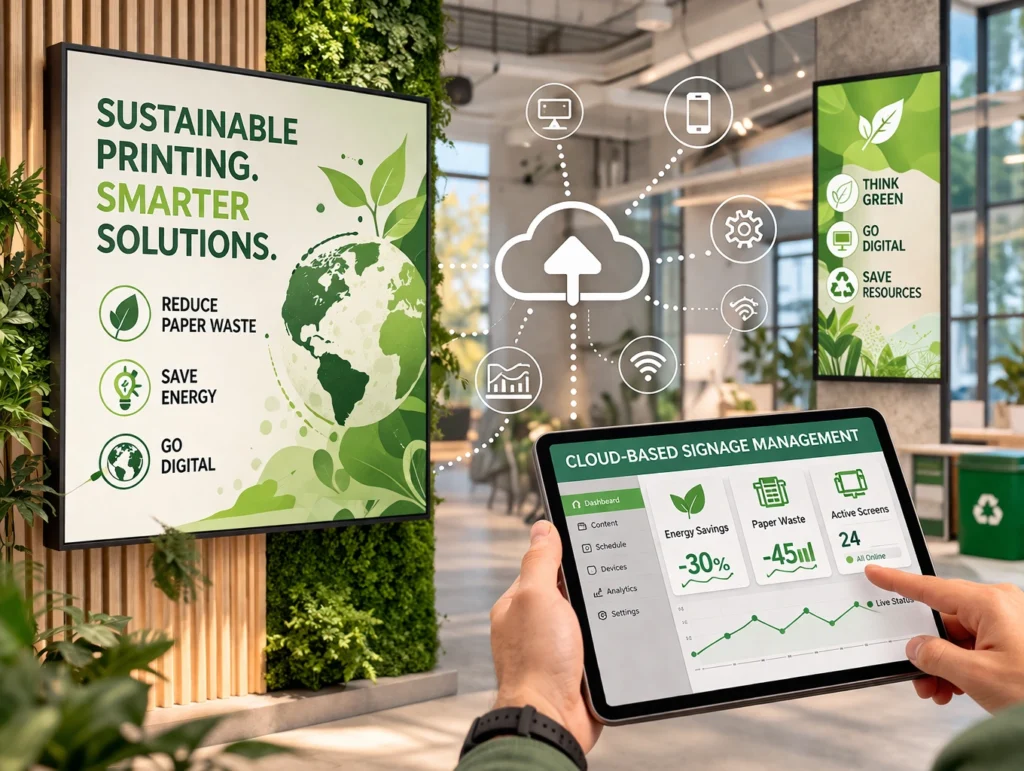
Cloud-based digital signage systems enable businesses to manage signage networks centrally, reducing the need for on-site interventions and physical content distribution. Remote management capabilities allow companies to update digital content across multiple locations without travel or logistics costs.
This approach not only improves customer experience by delivering real-time messaging but also supports sustainability by reducing emissions associated with transport and installation activities.
Interactive sustainable digital signage solutions can boost engagement and reduce waste, especially in retail settings where changing messages replaces the need for printed ads.
Digital signage can support environmentally friendly operations when integrated with energy efficiency planning and sustainability goals.
Balancing Eco-Friendly Sustainability and Practical Advertising Needs
While digital signage offers clear advantages in reducing paper waste and supporting flexible communication strategies, it is important to recognise that no signage solution is entirely impact-free. Businesses must balance sustainability efforts with practical advertising needs, customer experience expectations, and budget considerations.
Traditional signage may still play a role in certain campaigns, particularly when produced using sustainable materials and responsible printing processes. In many cases, combining digital signage solutions with targeted printed materials provides the most effective and environmentally conscious approach.
The sustainability of digital signage depends on factors such as energy-efficient technology adoption, lifespan management, and responsible signage management practices.
Final Thoughts
Sustainable digital signage has the potential to reduce waste, improve communication efficiency, and support corporate sustainability goals when implemented thoughtfully. By reducing reliance on printed materials, optimising energy consumption, and planning for responsible recycling, businesses can minimise the environmental impact of digital signage systems.
Digital signage refers to a modern advertising and communication solution that continues to evolve with advancements in energy-efficient displays and cloud-based management tools. For organisations seeking to build a greener future, sustainable digital signage can form an important part of wider environmentally friendly marketing strategies.