Why Digital Signage Has Become a Sales Tool, Not Just a Display Screen
In today’s digital world, customers expect more than static posters and printed price cards. They expect relevance, clarity, and immediacy. This is where Digital signage has moved beyond simple advertising and become a powerful tool where digital signage support sales by actively strengthening modern sales processes.
So, how does digital signage support sales processes? In real terms, it allows retailers and showrooms to influence decisions, guide customers, and support sales teams at key moments.
Across the UK, retailers and showroom operators are using digital signage displays to influence buying decisions, guide customers through the in-store experience, and equip sales teams with dynamic, real-time messaging. When implemented correctly, digital signage can help drive sales, increase engagement, and create a smoother, more persuasive customer journey.
This article explores the impact of digital signage, how it supports retail sales at every stage, and practical UK examples that show why digital screens have become a core part of effective marketing strategies.
What Is Digital Signage in a Sales Environment?
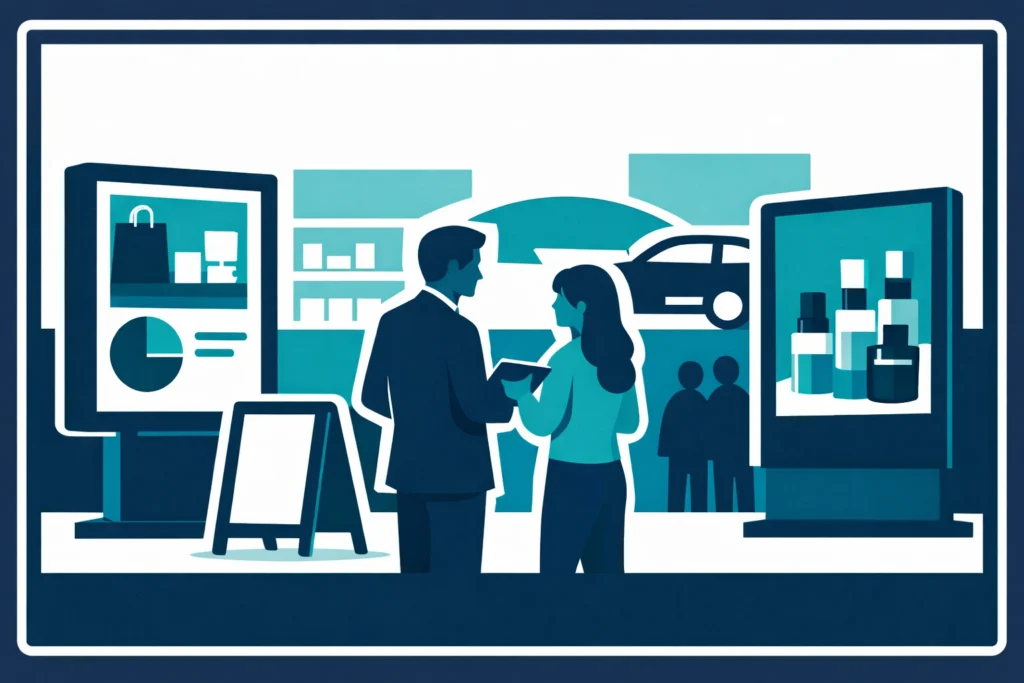
At its core, digital signage refers to the use of digital displays, screens, and content management systems to deliver targeted messages in physical spaces. In a retail or showroom setting, this includes:
- In-store digital signage
- Digital menu boards
- Promotional screens and advertising displays
- Interactive digital signage
- Real-time pricing or product information screens
Unlike traditional signage, digital signage allows brands to update content instantly, tailor messages to location or time of day, and respond directly to customer behaviour. This flexibility is what makes digital signage such an effective sales support tool rather than just a visual asset.
How Digital Signage Supports the Sales Process Step by Step
Sales do not happen in a single moment. They unfold across multiple stages of the customer journey, and digital signage transforms how each stage is supported.
1. Attracting Attention and Driving Footfall
The first challenge in retail is visibility. Digital signage screens are proven to outperform static signage when it comes to grabbing attention.
Bright, moving content naturally draws the eye. In high-traffic UK retail environments, digital signage displays positioned in windows or entrances can:
- Promote flash sales and limited-time offers
- Highlight new product launches
- Reinforce brand identity instantly
This ability to drive sales begins before a customer even enters the store, making digital signage a frontline sales tool.
2. Guiding the In-Store Experience
Once inside, customers need direction. Poor navigation often leads to frustration and missed opportunities. Retail digital signage helps solve this by:
- Guiding customers to departments or promotions
- Highlighting featured products
- Supporting wayfinding in large retail stores or showrooms
This improves the in-store experience and keeps customers engaged longer, which directly impacts sales volume.
3. Supporting Sales Teams with Real-Time Messaging
One of the most overlooked benefits of digital signage is how it supports sales teams.
Instead of relying on printed signage that quickly becomes outdated, sales staff can use digital signage content to reinforce conversations with customers. Screens can display:
- Key product benefits
- Comparison charts
- Finance or bundle offers
- Real-time promotions
This ensures messaging is consistent, accurate, and aligned with broader signage campaigns. It also reduces the pressure on staff to memorise every detail, allowing them to focus on building rapport and closing sales.
At its core, digital signage support sales by delivering targeted, real-time messaging that guides customers from interest to purchase.
Digital Signage and the Power of Real-Time Content
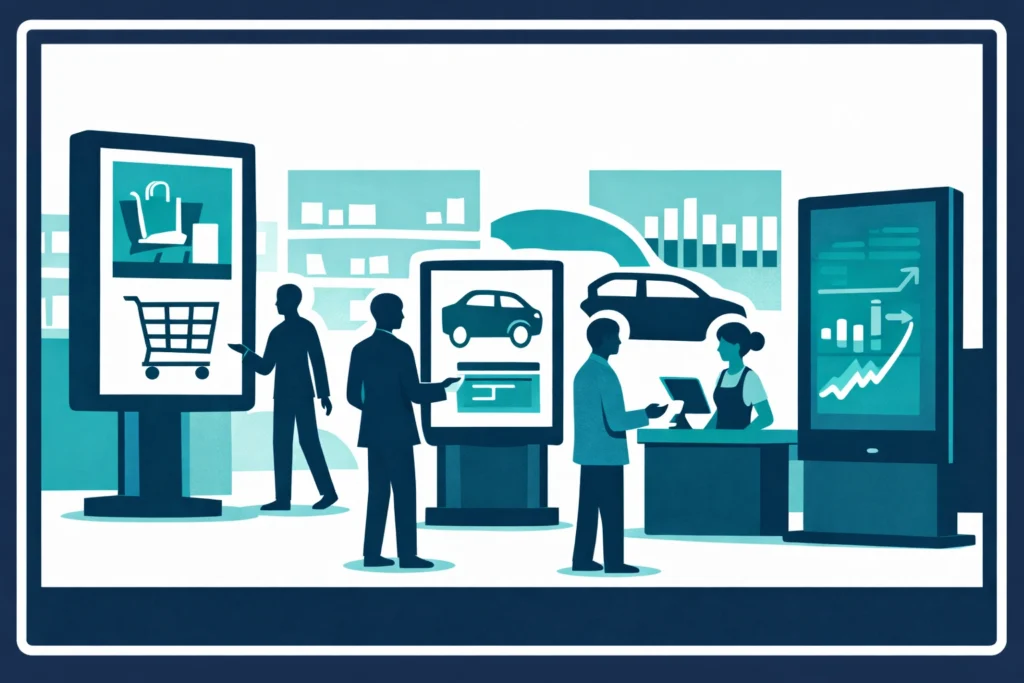
A major reason digital signage can increase sales is its ability to deliver real-time information.
In UK retail, where pricing, stock levels, and promotions change frequently, digital signage allows businesses to:
- Update offers instantly
- React to sales data
- Promote slow-moving stock
- Highlight high-margin products at the right time
This responsiveness gives retailers a competitive edge and ensures that advertising displays remain relevant throughout the day.
Digital Signage for Retail: Practical UK Examples
Example 1: High-Street Retail
In fashion and lifestyle retail, digital signage displays are often used to showcase styling ideas, seasonal campaigns, and live promotions. These screens help customers visualise products in use, which increases confidence and supports quicker purchase decisions.
Example 2: Automotive and Showrooms
In showrooms, digital signage supports longer, more considered sales journeys. Screens are used to:
- Display specifications and upgrades
- Compare models side by side
- Explain finance options visually
This use of digital signage solutions helps customers absorb complex information more easily, supporting both engagement and trust.
Example 3: Hospitality and Leisure Retail
From digital menu boards to promotional screens, hospitality venues use digital signage to upsell, cross-sell, and promote time-sensitive offers. These displays influence decisions at the exact moment of purchase, increasing average transaction value.
Digital Signage vs Traditional Signage in Sales Performance
While printed signage still has its place, it cannot match the flexibility of digital.
Traditional signage:
- Fixed messaging
- Manual updates
- Limited personalisation
Digital signage:
- Dynamic, changeable content
- Centralised content management
- Data-driven messaging
- Interactive digital experiences
This shift explains why many UK retailers now view investing in digital signage as a core part of their sales infrastructure rather than a marketing add-on.
The ROI of Digital Signage
A common question is whether digital signage justifies its cost. When viewed purely as an advertising expense, it can seem significant. But when assessed as a sales enablement tool, the ROI of digital signage becomes clear.
Digital signage supports:
- Increased dwell time
- Higher conversion rates
- Improved customer satisfaction
- Better sales consistency
- Reduced reliance on printed signage
Over time, the ability to reuse screens and update content digitally often results in lower long-term costs compared to repeatedly reprinting static signage.
How Digital Signage Creates Better Customer Engagement
Modern consumers are visually driven. Interactive digital signage takes this a step further by allowing customers to explore content themselves.
Touchscreens, QR codes, and interactive product selectors enhance customer engagement by:
- Encouraging exploration
- Reducing friction in decision-making
- Creating memorable shopping experiences
This engagement strengthens the emotional connection to a brand, which plays a critical role in repeat purchases and long-term loyalty.

Integrating Digital Signage into Your Sales Strategy
To be effective, digital signage must be integrated into your wider marketing campaign and sales process. This includes:
- Aligning content with promotions and pricing
- Supporting in-store staff conversations
- Ensuring brand consistency across screens
- Using data to refine messaging
Successful digital signage is not about filling screens with content, but about using digital signage to display the right message at the right moment.
Why Digital Signage Is Transforming Retail Sales
Digital signage is no longer optional for competitive retailers. It has become a key driver of sales performance, bridging the gap between marketing and the point of sale.
By enhancing the customer journey, supporting sales teams, and delivering real-time, engaging content, digital signage transforms how businesses sell in physical spaces.
Conclusion: Digital Signage as a Sales Enabler
Digital signage support sales by attracting attention, guiding customers, and reinforcing key messages at the point of decision.
For retailers and showrooms focused on performance, digital signage support sales not as a trend, but as a measurable, scalable sales tool.
It attracts attention, guides customers, reinforces sales conversations, adapts in real time, and ultimately boosts sales. For UK retailers and showrooms, digital signage is no longer just about display, it’s about performance.
At Pointmedia, we help businesses integrate digital signage displays alongside UK point of sale solutions, printed signage, and large-format graphics to create cohesive, high-performing retail environments.
If you’re exploring how digital signage can help increase engagement, improve sales consistency, and modernise your in-store experience, our team can guide you through strategy, design, and implementation.