The Rise of Digital Printing in Modern Print Services
Digital printing has completely reshaped how businesses approach commercial print. From short print runs and personalised marketing to fast turnaround projects, digital printing is used across almost every industry in the UK.
But what is digital printing, how does digital printing work, and how does it differ from traditional printing methods like offset printing or screen printing?
In this guide to digital printing, we’ll explain the digital printing process, the types of digital printing, the advantages of digital printing, and when digital printing is the best choice for your printing projects. Whether you’re printing business cards, brochures, posters, or personalised marketing materials, understanding digital printing technology helps you choose the right printing method.
What Is Digital Printing?
So, what is digital printing?
Digital printing is the process of printing digital-based images directly onto a printing material without the need for traditional printing plates. Unlike traditional offset printing, where plates must be created before printing begins, digital printing sends a digital file directly to the digital printing press.
Because digital printing eliminates the need for printing plates, it allows faster setup, lower costs for short print runs, and far greater flexibility. Digital printing is commonly used for commercial digital print, office printing, and on-demand printing where speed and accuracy matter.
In simple terms, digital printing is the process of reproducing a digital image directly onto paper, card, or other substrates using digital technology.
How Does Digital Printing Work?
To understand digital printing work, it helps to break down the digital printing process step by step.
- A digital file is prepared in a format that the printer can read
- The file is sent directly to the digital printer
- The digital printing press prints the image directly onto the material
- No printing plates are required at any stage
Digital printing presses print the image using either toner-based digital presses or inkjet printing technology. In both cases, the image is applied directly, rather than transferred via plates or blankets.
This process of printing digital-based images makes digital printing ideal for short print runs, personalised printing, and variable data printing.
Types of Digital Printing Technology
There are several types of digital printing, each suited to different printing needs.
Inkjet Printing
Inkjet printing uses liquid digital ink sprayed through a print head onto the material. Inkjet printers are commonly used for posters, signage, photo paper, and large-format printing projects.
Toner-Based Digital Printers
Toner-based digital printing uses heat to fuse toner to the paper. This method is widely used for brochures, flyers, business cards, and high-quality print runs where speed and consistency are essential.
Both methods allow digital printing presses to print high-quality results without traditional printing plates.
Digital Printing vs Traditional Printing Methods
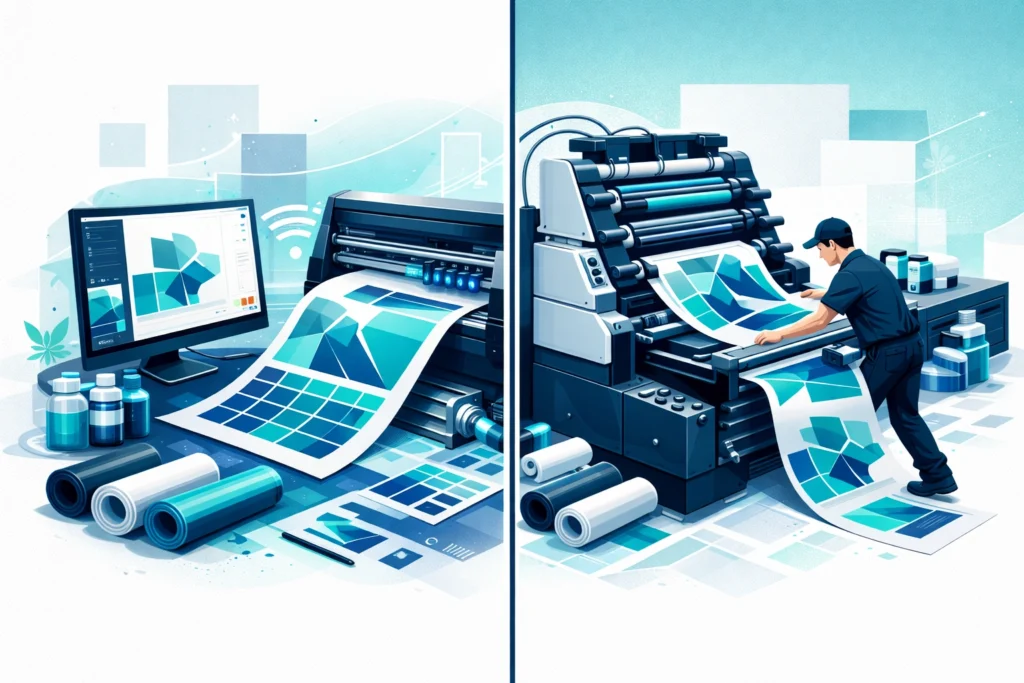
One of the most common comparisons is digital printing vs traditional printing.
Traditional Offset Printers
Offset printers use printing plates to transfer ink. Offset printing uses plates that must be created for each job, making it better suited to long print runs where setup costs are spread over high volumes.
Digital Printing Differs from Traditional Printing
Digital printers differ from traditional printing because:
- No printing plates are required
- Files are sent directly to the digital press
- Short print runs are cost-effective
- Variable data printing is possible
This difference between digital and traditional printing methods explains why digital printing has revolutionised commercial print.
Advantages and Benefits of Digital Printing
So, what is the advantage of digital printing?
The advantages of digital printing are clear:
- Faster turnaround times
- No need for printing plates
- Cost-effective short print runs
- Personalised and variable data printing
- On-demand printing
- Reduced waste
- High-quality print output
Digital printing offers greater flexibility than traditional printing methods, making it ideal for modern marketing and business needs.
When Digital Printing Is the Best Choice
Digital printing is not always the right solution, but it excels in many situations.
Digital printing is best used when:
- You need short print runs
- You want personalised printing
- You require fast turnaround
- You need to test designs before large production
- You want on-demand printing without storage
For many printing projects, digital printing allows businesses to remain agile and responsive.
Common Printing Projects Using Digital Printing
Digital printing is used across a wide range of printing projects, including:
- Business cards
- Flyers and leaflets
- Brochures
- Posters
- Menus
- Office printing
- Marketing materials
- Personalised direct mail
Because digital printing presses print the image directly, changes can be made quickly without additional setup costs.
Digital Printing in the UK Print Industry
In the UK, digital printing has become central to modern print services. The rise of digital printing reflects the need for speed, flexibility, and quality in commercial printing.
UK printers increasingly rely on digital printing technology to support:
- Short-run commercial print
- Variable data printing
- Personalised marketing campaigns
- On-demand printing services
The rise of digital printing continues as businesses move away from rigid traditional printing processes.
Digital Printing vs Offset Printing: Making the Right Choice
When comparing digital printing vs offset printing, consider volume, budget, and timing.
Choose digital printing if:
- You need flexibility
- Your print run is short
- Personalisation is required
Choose offset printing if:
- You need very large volumes
- Colour consistency across thousands of prints is critical
Understanding how digital printing differs from traditional offset printing ensures the best outcome for your project.
Conclusion: Understanding Digital Printing
So, what is digital printing?
Digital printing is a modern printing method that allows digital files to be sent directly to the digital printing press without printing plates. It offers speed, flexibility, and efficiency that traditional printing methods cannot always match.
Read how how digital signage supports sales here
At Pointmedia, we provide professional digital printing services in the UK, supporting a wide range of printing projects using advanced digital printing technology. If you want to know whether digital printing or traditional printing is right for your next project, our team is here to help.